Published on
Tan Yuting is one of eight Resident Composers selected to participate in the 2026 Mizzou International Composers Festival. MICF Resident Ensemble Alarm Will Sound will perform her composition glossy starlings in glassy trees at 7:30 p.m. on Saturday, July 25, at Columbia’s Missouri Theatre. The concert is free and open to the public.
Singaporean composer Tan Yuting explores the interaction of different sounds and the manipulation of rhythm, texture, and timbre to create evocative soundscapes. Her music has been recognized with awards including First Prize in the Macht Orchestral Composition Competition (2018), First Prize in the Virginia Carty DeLillo Composition Competition (2018), and Third Prize in the Prix d’Été Competition (2017) at the Peabody Institute of the Johns Hopkins University, and has been performed in Singapore, USA, UK, China, Thailand, Malaysia, Finland, Australia, New Zealand, Mexico, and Italy. Past collaborations include performances by the Singapore Symphony Orchestra, American Composers Orchestra, Peabody Symphony Orchestra, Megalopolis Saxophone Orchestra, Sandbox Percussion, Ekmeles, National Sawdust Ensemble, Tacet(i) Ensemble, Aspen Contemporary Ensemble, Ensemble Dal Niente, Ding Yi Music Company, The Opera People, IHClars, K⼝U, Quince Ensemble, Empyrean Ensemble, ~Nois, Now Hear This, Unassisted Fold, and Ensemble Soundinitiative.
Yuting also enjoys working with artists from other fields and creating music in collaboration with other art forms. In 2019, she performed her original live score for the USA premiere screening of Chinese film pioneer Shouju Zhu’s 1925 film, Stormy Night (Fengyu zhi ye). Yuting often looks to poetry when she is composing as she is interested in the tactile or visual associations between the text and the music that she is writing. Her doctoral dissertation composition, Amnesia, was based on a poem she wrote of the same title. She has also performed improvisations and compositions on the piano to accompany poetry recitals.
Currently, repetition, memory, and groove are common themes in her research and artistic practice. As part of her doctoral research, Yuting’s paper “‘Music is pictures of music’: Seeing Double/Hearing Double in Hans Abrahamsen’s Schnee” relates principles of visual perception to Abrahamsen’s construction of the piece and explores the ways repetition and repetitive structures affect temporal experience in the hour-long work.
Yuting received her PhD in Music Composition from the University of Chicago, where she was supported by a full fellowship from the Division of the Humanities. She also holds Master of Music degrees in Music Composition and Music Theory Pedagogy from The Peabody Institute of the Johns Hopkins University, and a Joint Bachelor of Music Degree in Music Composition with Honours (Highest Distinction), awarded jointly by the Yong Siew Toh Conservatory of Music (National University of Singapore) and the Peabody Institute. Apart from composition, Yuting also plays the piano and occasionally writes poetry. She currently teaches at the Yong Siew Toh Conservatory of Music, National University of Singapore.
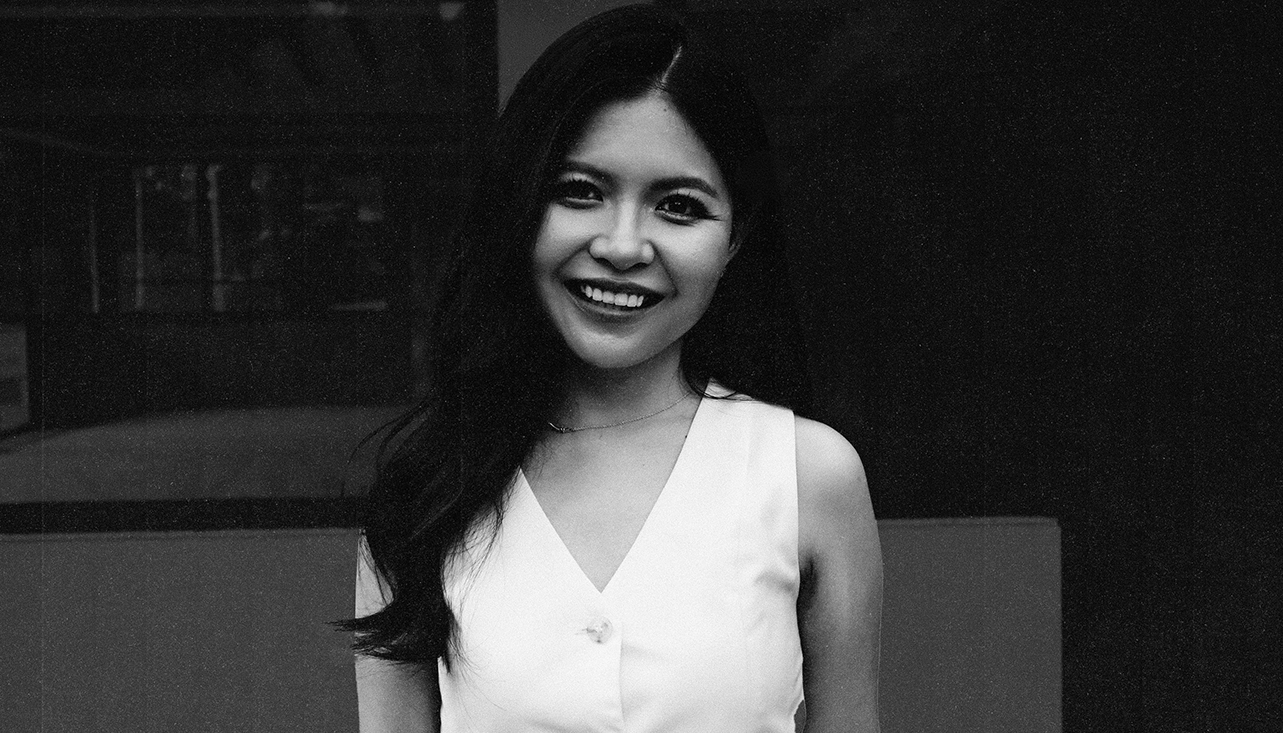
We recently chatted with her via email.
What is your musical background? When and how did you begin composing?
I remember enjoying making up tunes as soon as I could play my first instrument (piano). As part of the Music Elective Programme in Singapore during my secondary school years, I had to choose between the performance track or the composition track. I naturally gravitated towards composing and have never looked back since! Later on in university, I was finally able to start taking formal composition lessons, beginning with my undergraduate studies in Singapore and culminating with my PhD in Chicago.
How did you hear about MICF?
My friends who have attended MICF in previous years spoke highly of their experience at the festival and encouraged me to apply, too!
Tell us about your piece that will be performed at MICF. What should we listen for?
My piece, glossy starlings in glassy trees, reflects on the relationship between humans and nature. Musical gestures and textures in the piece were constructed from my hearing of birdsong in places where nature coexists with us in the urban environment of Singapore.
Also, the flexatone features as a prominent instrument in the piece. Throughout the piece, the rest of the ensemble attempts to imitate the peculiar sounds of the flexatone, blurring distinctions between the artificial (other instruments imitating the flexatone) and the organic (the natural sounds of the flexatone).
What does it mean for you to work with an ensemble like Alarm Will Sound?
I am really excited to work with Alarm Will Sound on my new work! They are all excellent musicians who give their all to the music and I have always been in awe of the versatility and energy of the ensemble. Knowing that Alarm Will Sound will be premiering my piece gave me great creative freedom during my writing process.
What do you hope to learn from your MICF experience?
I am looking forward to listening to all the new music and learning about the creative processes behind the music of my fellow composers at MICF!
To stay up to date with all Mizzou New Music Initiative announcements, follow them on Instagram and Facebook: @MizzouNewMusic